
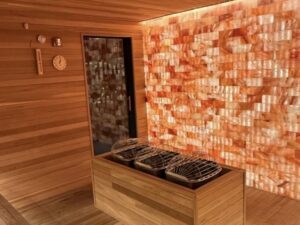
Yes, in most cases you can put a sauna in a New York City apartment. The real question is not the sauna itself but what your building allows: its electrical capacity, its ventilation, and your co-op or condo board’s alteration rules.
A home sauna in Manhattan or Brooklyn is a small construction project inside a shared building. Get the building questions answered first and the sauna is the easy part. Here is what decides whether it works, and what it takes.
Will my co-op or condo board approve a sauna?
Usually, if the plan is clear and professionally prepared. Most co-ops and many condos require an alteration agreement for any work that adds electrical load or touches walls, and a sauna does both.
Boards and their engineers typically want to see:
- Drawings showing the sauna’s location, size and construction
- The heater’s electrical load and how it will be supplied
- How heat and moisture will be kept out of neighboring walls
- Proof of insurance and licensed trades for electrical work
A complete submission the first time is what keeps approval from dragging on for months.
What electrical service does an apartment sauna need?
A traditional electric sauna heater usually needs its own dedicated 240V circuit. Small heaters for one or two people draw less than larger family units, but none of them run on a standard outlet.
In older pre-war buildings, the apartment’s panel or the building’s riser may not have spare capacity. That is the first thing to check, because it decides which heater size is possible. In NYC, the new circuit must be installed by a licensed electrician and filed with the Department of Buildings.
How do you handle heat, ventilation and moisture?
This is where apartment saunas go wrong. The cabin is rarely the problem; what it does to the walls around it is. A properly built sauna has a vapor barrier behind the wood, fresh air in low and exhaust out high, and insulation that keeps heat from reaching a neighbor’s wall.
A steam room is a bigger job than a dry sauna. It needs a fully waterproofed and vapor-sealed enclosure, a sloped ceiling so condensation runs off instead of dripping, a floor drain, and a steam generator with a water supply. In an apartment, a dry sauna is usually the simpler choice; a steam room works best where a bathroom is already being renovated.
Where does a sauna fit in a NYC apartment?
Less space than most people expect. Common spots:
- A converted closet: a compact one or two person sauna can fit in a deep walk-in closet.
- The primary bathroom: good for a sauna or steam room during a bathroom renovation, since plumbing and waterproofing are already nearby.
- A townhouse cellar or top floor: the most room to work with, and often room for a sauna, steam room and cold plunge together.
- A building amenity floor: for condos and rental buildings adding a shared wellness space.
The right spot is the one with access to electrical service and a path for exhaust air.
Do you need a permit for a sauna in NYC?
The sauna cabin itself is not usually the permit question; the work around it is. A new dedicated circuit is electrical work that a licensed electrician files with the Department of Buildings. A steam room adds plumbing, which needs a licensed plumber. Any wall changes may also need filing, depending on the scope.
Your building’s managing agent will tell you what the board requires on top of the city’s rules. Plan for both.
How much does an apartment sauna cost in NYC, and how long does it take?
A custom sauna installed in a New York apartment starts around $25,000. The final number depends on size, the heater and finishes, how much electrical work the building needs, and whether walls are being opened. A steam room usually costs more than a dry sauna because of the waterproofing, drainage and plumbing.
The build itself is usually the short part. Board approval and the electrical filing often take longer than the construction, so it pays to start the paperwork early.
Planning a sauna in New York?
Aquatics International Group builds custom saunas and steam rooms across New York City, from compact apartment saunas to townhouse spa suites and building amenity floors. We check your building’s electrical capacity, ventilation and board requirements before anything is ordered, then size the sauna to what the building allows.
See our sauna and steam room construction in NYC, or call 212 798 8212 to talk through your space.